Queen of Hearts Jackpot: How the Pot Grows and What the Winner Takes Home
The Queen of Hearts jackpot is the money set aside for the winner under your club’s published payout split. It grows each week the Queen stays hidden because a share of that week’s ticket sales rolls forward, but it isn’t the same as the total cash collected.
Queen of Hearts Jackpot: How the Pot Grows and What the Winner Takes Home
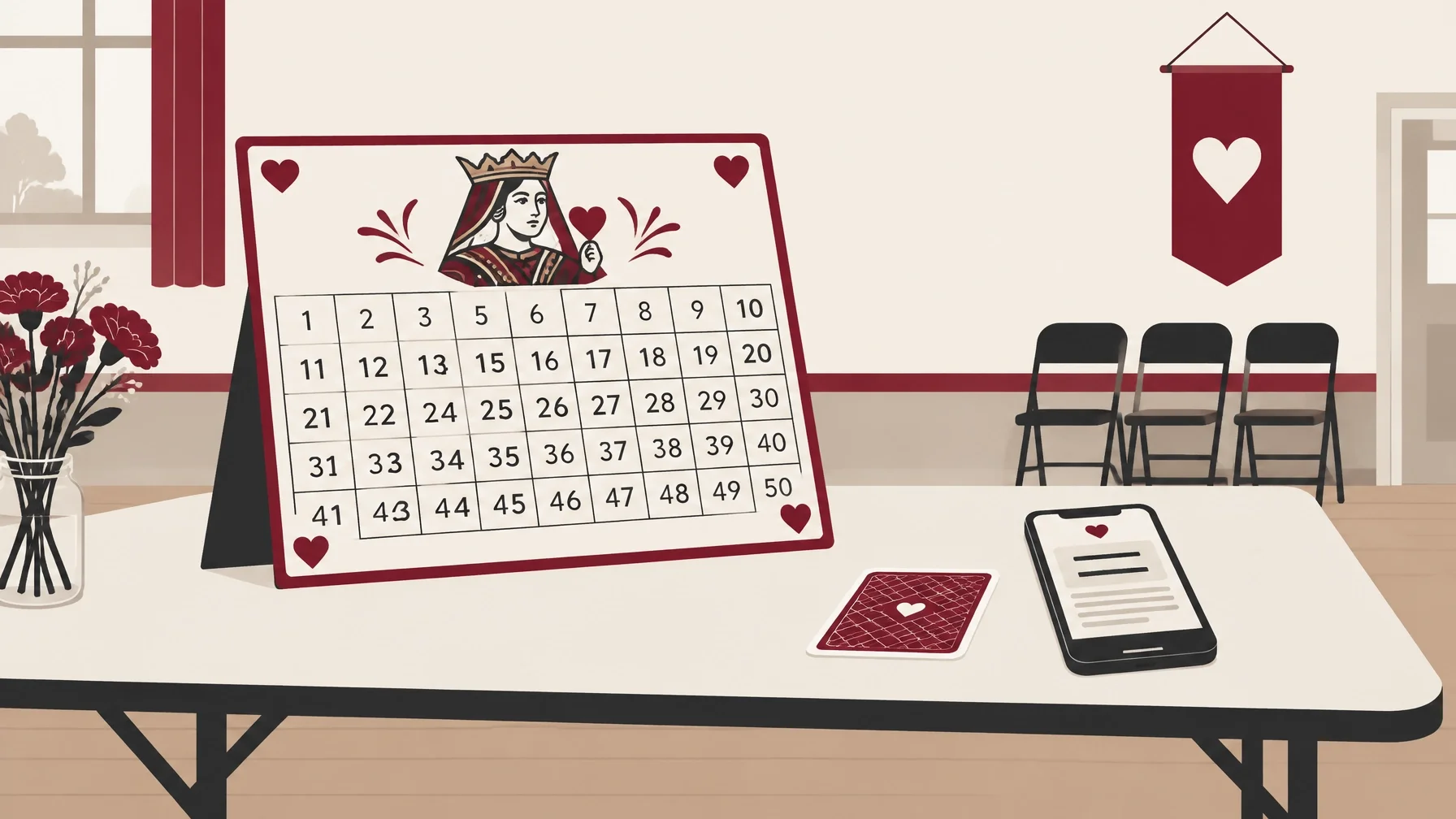
The Queen of Hearts jackpot is the money set aside for the winner under your club’s published payout split. It grows each week the Queen stays hidden because a share of that week’s ticket sales rolls forward, but it isn’t the same as the total cash collected.
That distinction is the answer to a lot of drawing-night questions. Players want to know what the board’s number means, and volunteers need a clear way to explain what’s in the pot and what a winner could receive.
Why isn’t the jackpot the same as the money we took in?
Gross sales are all the money collected from ticket sales before it’s divided. The winner’s share is the portion allocated to the prize under the club’s published split. The remainder may go to the club, expenses, other prizes, or another purpose specified in the house rules.
For a simple illustration, imagine your club takes in $1,000 in ticket sales:
Example split Winner’s share Remaining share 50/50 $500 $500 60/40 $600 $400
In this example, the first number is the winner’s allocation, and the second is the amount remaining for the club or other purposes as its rules specify. A club might handle expenses separately, so this table doesn’t account for every possible arrangement.
These percentages are examples, not a standard. Your organization’s house rules and local law govern the actual split. For the broader explanation of how clubs set their terms, see Queen of Hearts raffle rules.
How does the Queen of Hearts jackpot grow?
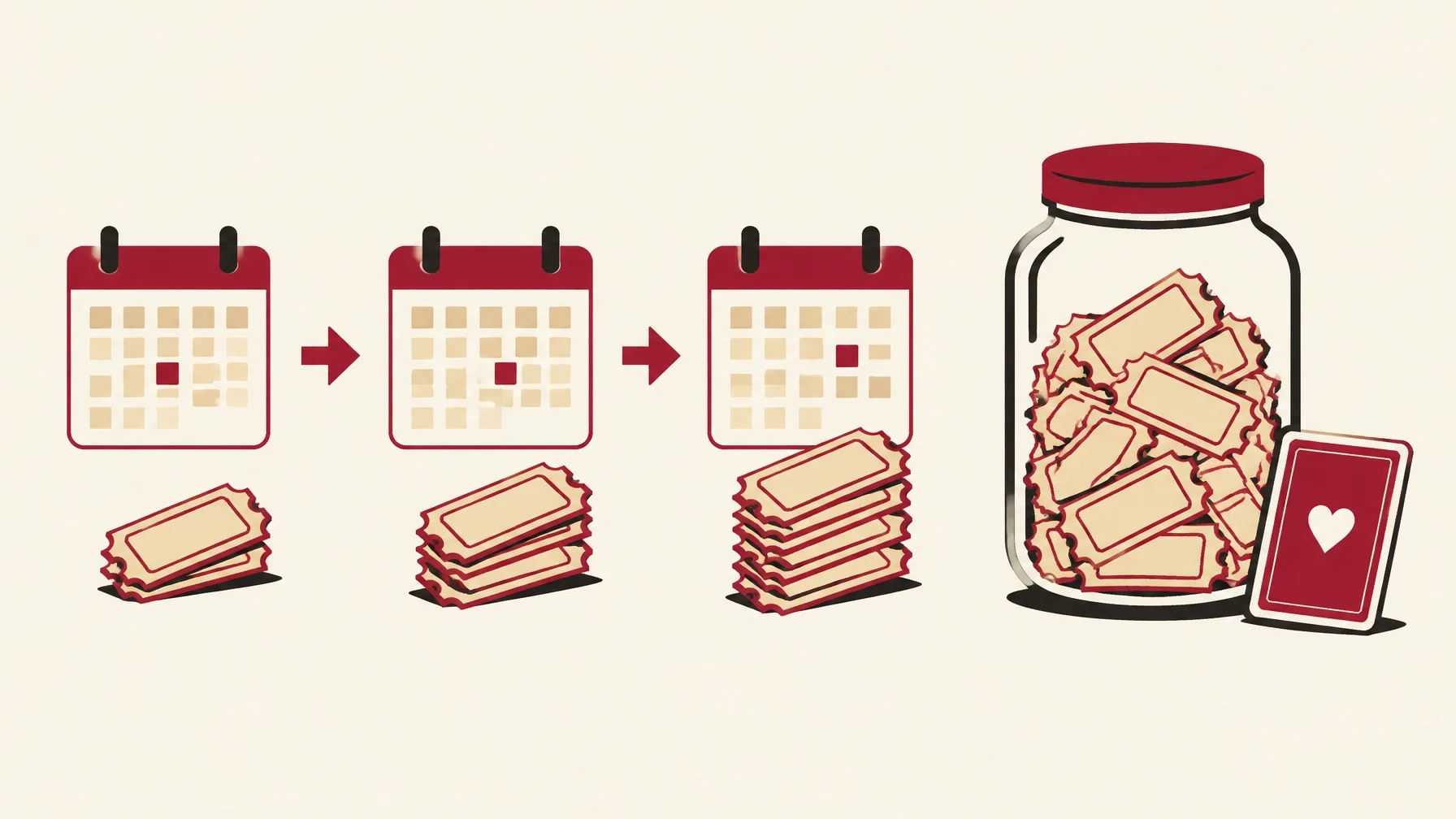
In a progressive raffle, the winner’s share from a week with no Queen of Hearts win carries forward. The next week’s eligible sales add to that amount, so the potential prize can build over multiple drawings.
Here’s a simplified example using a 50% winner allocation, assuming no cap, separate fees, or other adjustments:
Week 1: $1,000 in sales adds $500 to the winnable amount. The Queen isn’t found, so it rolls over.
Week 2: $1,200 in sales adds another $600. The winnable amount is now $1,100.
Week 3: $800 in sales adds $400. The winnable amount is now $1,500.
That’s how a Queen of Hearts raffle pot can grow over time: the eligible winner’s share accumulates while the round continues. Your club’s rollover method may differ, so use the amount and terminology in its published rules.
How do you calculate the winnable jackpot?
Start with the amount allocated to the prize under your club’s rules, not the total sales collected. Then apply the payout split and any documented conditions that affect the winner’s share.
For example, if $10,000 in eligible sales and carryover is subject to a 50% winner allocation, the winnable amount would be $5,000 before any other applicable terms. If the posted $10,000 were gross sales, showing it as the amount the winner takes home would be misleading.
This is one of the easiest ways for confusion to start at the ticket table. The word “pot” may mean gross sales to one person and the winner’s share to another. Use a clear label such as “winnable jackpot” and say what it represents. If conditions in your house rules can change the amount paid, make that clear too.
The displayed figure may also be an estimate until ticket sales are closed and the club verifies its records. If that’s your practice, tell players when the number becomes official and make sure the rules explain how the final amount is determined. A posted number should never promise more than the organization’s rules and confirmed accounting support.
Can a jackpot have a cap or reset?
Some organizations set a jackpot cap. The cap, what happens to sales after it’s reached, and whether drawings continue are all matters for that organization’s published terms and applicable local law. Don’t assume another club’s cap or procedure applies to yours.
When the Queen is found, that round ends. A new round may start at zero or with a seed amount carried forward, depending on the house rules. State the reset method plainly so players can tell whether the next round begins fresh or includes money from the prior one.
What are the Queen of Hearts raffle odds?
There isn’t one fixed odds number that applies to every ticket or every week. The chance depends on how many tickets are sold, which positions remain unrevealed, the position chosen on a ticket, and the organization’s drawing procedure.
On a 54-card board, if one card has been revealed and 53 positions remain, the selected position on a ticket has roughly a 1-in-53 chance of holding the Queen, if that ticket is drawn and all remaining positions are equally likely. That is not the same as the overall chance for one ticket to win: the ticket must also be selected from that week’s tickets.
As positions are revealed, fewer remain, so the card-match chance for a selected position can improve later in the round. But the number of tickets sold and the drawing procedure still matter. House rules and local law govern how the raffle is run; don’t describe an example as a guaranteed or fixed personal chance.
Who should announce the jackpot, and where?
Choose one person or role to confirm the amount, then post it where players routinely look: the board, a public page, or both. Update it on drawing night, after the results and the amount have been checked. If the amount is still provisional, label it clearly.
For fewer repeat questions, announce the winnable amount and say that’s what the displayed number means under the club’s current split. Keep the label consistent from week to week rather than switching between gross sales and the winner’s share.
What should organizers check before posting the amount?
Before drawing night, confirm that your club has these details documented and that the posted figure matches them:
The winner’s share and how the split is applied.
The amount displayed is identified as the winnable jackpot, not gross sales.
The rollover method when the Queen isn’t found.
The reset amount or method for a new round.
Any jackpot cap and what happens when it’s reached.
The displayed number is updated and checked on drawing night.
A jackpot prize may have tax consequences for the winner or the organization. Your club shouldn’t give tax advice; direct questions to a qualified tax professional.
If your volunteers want one place to publish the confirmed winnable amount alongside the revealed card and next drawing date, Queen of Hearts Board’s how-it-works page explains the process, and the demo board shows an example. It’s a results display only: each organization sells its own tickets, runs its drawing, and handles prizes under its house rules and local law.